Written by Sarah Radcliffe, Habitat Portland Region’s Director of Government Relations
The 2026 legislative short session has concluded, and Habitat Portland Region showed up strong. Thank you to all of our community members who continue to advocate for affordable housing investment. Here’s where things landed.
Outcomes from the short session
First, two bills we hoped would succeed did not cross the finish line.
- LIFT for Homeownership: SB 5702
The LIFT program (Local Implementation & Fast Track) is Habitat Portland Region’s main source of public funding for building new homes. We’ve been awarded over $28 Million in LIFT funds in the past five years.
In 2025, the legislature allocated a historic high of $100 million for LIFT Homeownership funding that would be spread across two years, the 2026-27 biennium. After many years of underfunding and underbuilding starter homes in Oregon, more developers are beginning to scale up capacity to build affordable homes for sale, and LIFT has become a more viable program. Now, we face the reality that the funding, while increased, doesn’t scale to meet this increased appetite to build. $100 million may only fund about half of the eligible projects in the pipeline. To fully meet this moment, we advocated for additional investment.
We were feeling optimistic until a surprise appeared in a late-session draft: $75 million had been allocated for rental housing and $0 for homeownership. At first, advocates assumed it was a drafting error. No one, not even rental developers, had been calling for that level of rental funding, and we were united around the homeownership priority. At this point in the session, however, there wasn’t enough time to advocate for a revision. While this falls short of our goal, we welcome the $75 million for LIFT Rental (we need new housing of all types!) as well as $25 million to preserve existing affordable housing — this is critical as rising operational costs put strain on many properties.
This summer, we’ll focus on helping legislative leaders understand that developers have built real capacity to deliver more affordable ownership homes — but that capacity is at risk without reliable funding. To meet the growing need in our community, we must bring sustained investment so that capacity isn’t lost.
- Down Payment Assistance HB 4136
HB 4136 would have created a permanent funding source for down payment assistance for first-time homebuyers by eliminating the mortgage interest deduction (MID) on vacation properties that sit vacant for much of the year. The MID is Oregon’s largest housing subsidy and is built to benefit higher-income households.
Why subsidize empty vacation homes when those funds could serve the many Oregonians struggling to buy their first home amid record home prices, high interest rates, and limited housing supply?
Representative Annessa Hartman introduced HB 4136. As the manager of NAYA’s Community Wealth Building Program, Rep. Hartman knows firsthand how hard it is to achieve homeownership, particularly for communities that have been closed out of opportunities to build generational wealth.
This bill had a hearing in the House Revenue Committee, with powerful testimony from homebuyers across the state. Despite official opposition from the Oregon Realtors Association, dozens of realtors supported this effort, underscoring the importance of expanding access to homeownership as a core goal and principle of their profession.
This bill didn’t advance, but it did reignite a longstanding discussion around the Mortgage Interest Deduction (MID), Oregon’s largest housing subsidy. The MID subsidy eclipses Oregon’s spending across the rest of the housing continuum — from emergency shelters, eviction defense, affordable housing production, or down payment assistance.
A 2022 audit by the Oregon Secretary of State found that the roughly 18,000 taxpayers in the top 1% received more benefit from the MID than the 727,000 taxpayers in the bottom 40% combined. Some housing advocates are discussing a more comprehensive approach to MID reform in the 2027 session.
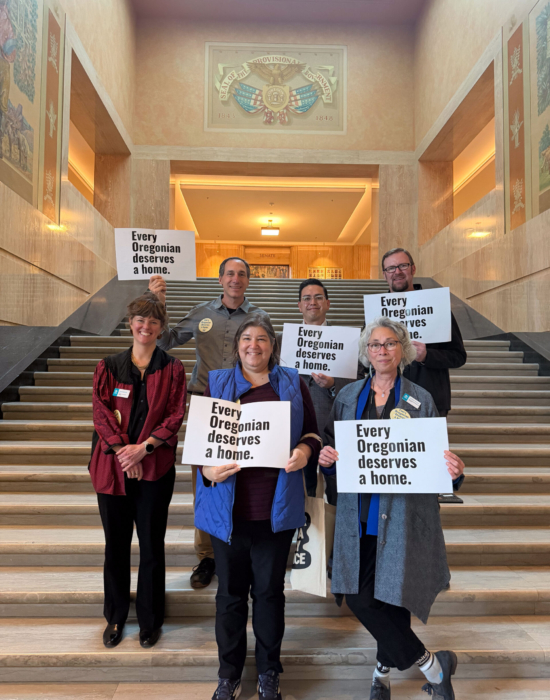
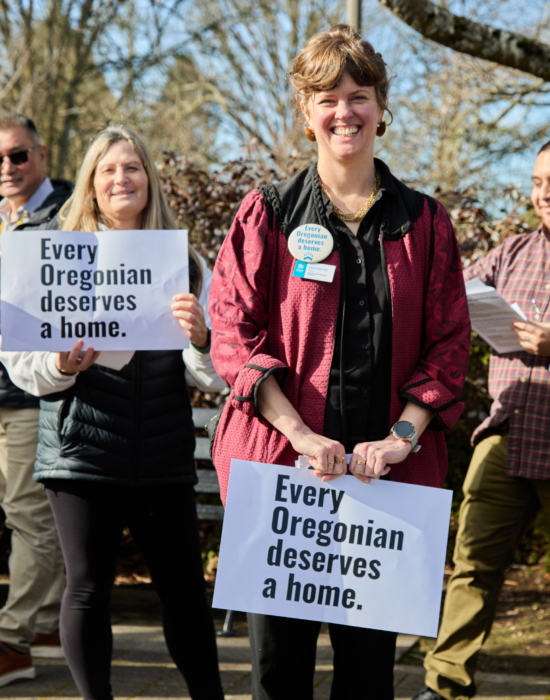
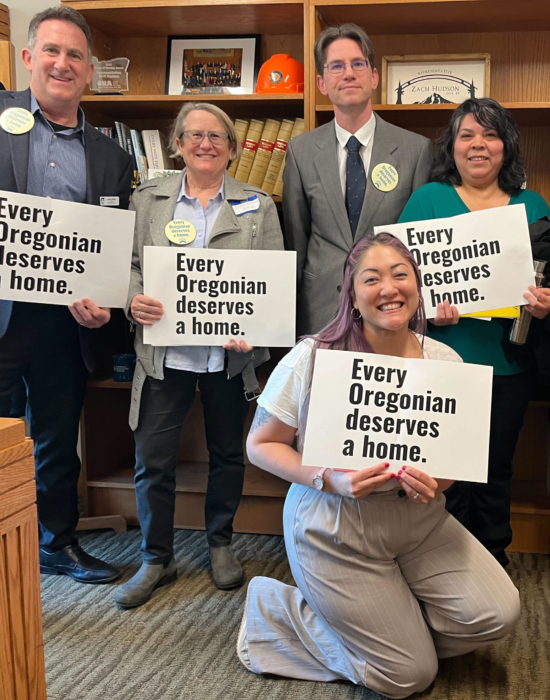
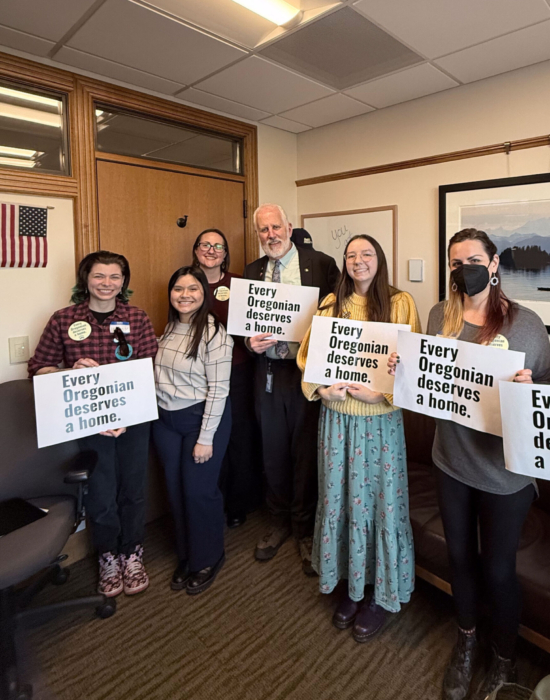
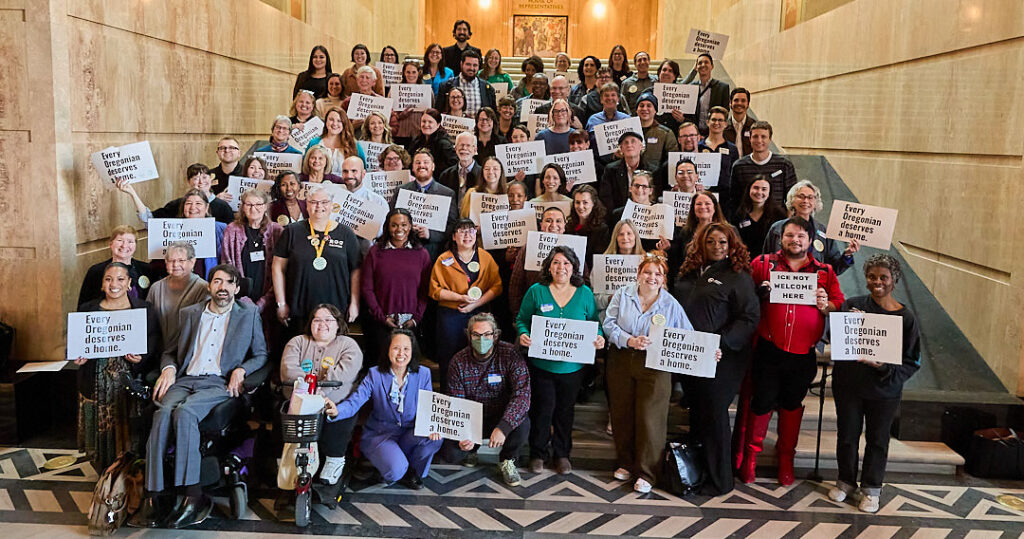
Habitat for Humanity Oregon partnered with Housing Oregon and the Oregon Housing Alliance to host a statewide Housing Opportunity Day advocacy effort at the Capitol on February 5. The event brought together more than 170 participants who met with 71 legislators, demonstrating broad statewide support for housing investment.
Now for the wins:
- SB 1521 passed, ensuring that Inclusionary Zoning programs encourage, rather than suppress, housing production
Habitat Portland Region advocated for a bill that, because of its narrower geographic scope, didn’t become a priority for the statewide Habitat network. SB 1521 incorporates lessons learned from Portland’s IZ program into any new IZ programs in the Metro region.
Inclusionary Zoning (IZ) requires market developers to include a percentage of affordable units in new buildings. Portland’s IZ program was established in 2012. The program backfired because developers were unable to make projects pencil out with the added requirement to include affordable units in their buildings. As a work around, developers built smaller buildings to avoid the requirements, contributing to a sharp drop in housing production.
In the past two years, Portland implemented a fix to the problem — applying tax abatements to rental building developments, effectively offsetting the costs and helping these projects move forward. Unfortunately, the fix Portland implemented for rental did not apply to developers struggling to build homeownership buildings (condos). This lopsided approach has continued to suppress homeownership development.
SB 1521 changes that. By 2029, Portland will be required to offset the IZ requirements for condos as well—helping condo developments pencil out. This year’s win, combined with the 2025 passage of HB 3746, which addressed high insurance costs for condo developers, could help unlock a new wave of mixed-income condo development in Portland. This means that Habitat homebuyers could have opportunities to buy condos in privately developed buildings at an affordable price.
Sightline Institute did a lot of the heavy lifting on this bill.
Looking ahead
The next few years will be lean, with housing advocates focused on preventing cuts to critical programs and stretching limited dollars. From a budget perspective, permanently affordable homeownership development continues to make sense. It can serve the same income levels as affordable rental housing but doesn’t present the structural challenges and need for continued investments that the rental buildings are currently facing. For individual families, the stability of a fixed 30-year mortgage at an affordable rate is an anchor during uncertain times. We’ll be making this case to legislators throughout 2026 and we hope you’ll join us!
For more ways to get involved, check out the Housing Alliance’s resources and sign up for Habitat Portland Region’s newsletter.